You Wont Find This On CNN
Awareness is the first step toward a better web, but it isn’t enough. To move the needle, we have to know the mechanics of how people actually experience the digital world.
This is my curated archive of the standards, research, and technical insights that turn ‘inclusion’ from a buzzword into a reality.
Follow the thread, learn the rules, and let’s raise the bar together.
94.8% Failure: The 2026 Reality Check
The latest analysis of the top one million homepages reveals a staggering truth that the industry rarely discusses out loud. While awareness is supposedly at an all-time high, the actual code shows that we haven’t even moved the needle by 1% in the last year. Most sites are still failing the same basic contrast and structural standards they were a decade ago.
- 81% Contrast Failure.
- Code complexity spikes.
- Zero structural shift.
The Overlay Trap
You won’t find this on the news, but the “quick fix” accessibility plugins are actually painting a bullseye on small businesses. A growing number of lawsuits now specifically cite these automated “one-line-of-code” solutions as the primary barrier for disabled users. Real protection comes from fixing the foundation of your site, not slapping a patch on a broken experience.
- Blocked screen readers.
- Fake legal claims.
- Failed foundations.
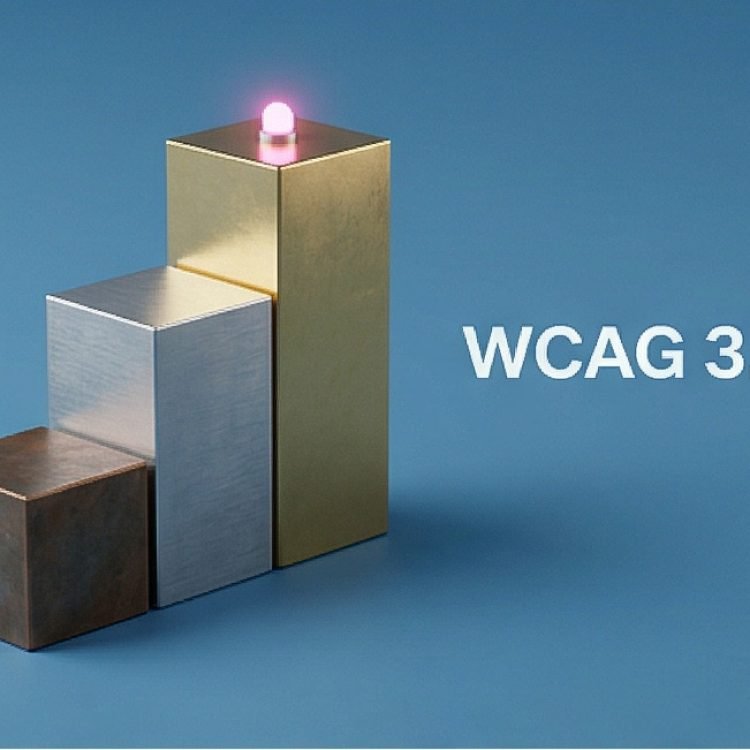
WCAG 3.0: Moving Beyond Pass/Fail
The “Accessibility Thread” is shifting toward a more nuanced way of measuring how a site actually works for human beings. The newest W3C draft moves away from the rigid AA/AAA checklist and toward a points-based “scoring” system. This evolution focuses on actual human outcomes across neurodiversity, mobile, and emerging technology.
- Graded 0-4 Scoring.
- Bronze Baseline Tier.
- Holistic User Journeys.
The Global Lockdown
The grace period for digital accessibility is officially ending as we enter the April 2026 enforcement window for new federal rules. These standards set a hard technical benchmark for state and local government services, effectively ending the era of “good intentions.” If your digital procurement doesn’t meet these benchmarks, you are essentially buying a lawsuit.
- Hard April Deadlines.
- Enforceable Technical Benchmarks.
- Global Liability Shifts.
Neuro-Design: The Hidden Gap
Mainstream talk focuses on vision and hearing, but the real “Unmasked” challenge of 2026 is reducing cognitive load. Designing for neurodiversity requires a shift toward predictability and sensory control that most standard frameworks still ignore. It’s no longer enough to be “readable”—your site must be usable for brains that process information differently.
- Reduced Sensory Overload.
- Predictable Navigation Patterns.
- Focus on Cognitive-Ease.
The AI Invisibility Crisis
While the news focuses on AI efficiency, it’s ignoring the new wave of “accidental” barriers built by autonomous coding agents. These AI-driven interfaces often bypass traditional semantic markers, leaving assistive technology users completely in the dark. We are currently seeing a surge in litigation targeting code generated by AI that lacks foundational accessibility.
- Broken Agent Logic.
- AI-Assisted Lawsuit Surge.
- Hidden Code Failures.
Copyright 2025, Esmerelda Jade Design CO. All Rights Reserved.